The exhibition “Spaces of Communication” opens up spaces for cooperation and communication. The artists involve visitors in the concept and realization of their works, deliberately allowing for an open outcome of the working process. Either residents of Siegen and the surrounding area are invited to participate in advance of the exhibition, or the installations are created and transformed on site through the participation of visitors.
For the presentation “Spaces of Communication”, Jef Geys (*1935), Christine and Irene Hohenbüchler (*1964), Stefan Kern (*1966), Apolonija Sustersic (*1962), and the artist group Swinger (Wolfgang Stehle, *1965, Stefan Wischnewski, *1974, Martin Wöhrl, *1974) transform the museum into spaces for action.
Jef Geys (born in 1934 in Leopoldsburg), a former art teacher, has been dealing with social, political, and economic issues since the 1950s. From the outset, his works were designed for collaboration with children, young people, and adults. For Siegen, he will reissue his “Kleurboek voor Volwassenen” (Coloring Book for Adults) from 1964/65 and distribute two coloring books each to around 100 schoolchildren in Siegen. One copy, completed and signed by the children and young people, will then be exhibited in the museum, while the second copy, signed by the artist, will be returned to the pupils. This exchange of signatures will not only be evidence of cooperation; Geys also clearly questions the notions of artistic authorship.
The works of Christine and Irene Hohenbüchler (*1964 in Vienna) are the result of “multiple authorship”—as the artists themselves describe their approach, which allows for an open creative process. Christine and Irene Hohenbüchler will transform the museum into a space for action by inviting visitors to knot long threads with beads and balls made of glass and plastic, which will be attached to the ceiling and gradually fill the exhibition space. Experimental contemporary music will be played, which is intended to influence the design of the structures of beads and balls in the room.
Stefan Kern (born in Hamburg in 1966) offers visitors his minimalist sculptures “Untitled (Sofa Sculpture)” and “Koppel” as seating, thereby triggering communicative situations. These seats are designed in such a way that visitors must either climb over the backrest, which is closed on four sides and therefore difficult to access, or climb onto the fence-like enclosure in order to sit down. Once this physical and psychological barrier has been overcome, the rectangle provides an opportunity to communicate with someone opposite. The performative element of these works lies not only in their real usability by the recipients, but also in the creation of a situation in which the difference between sculpture and event is realized by the viewers themselves.
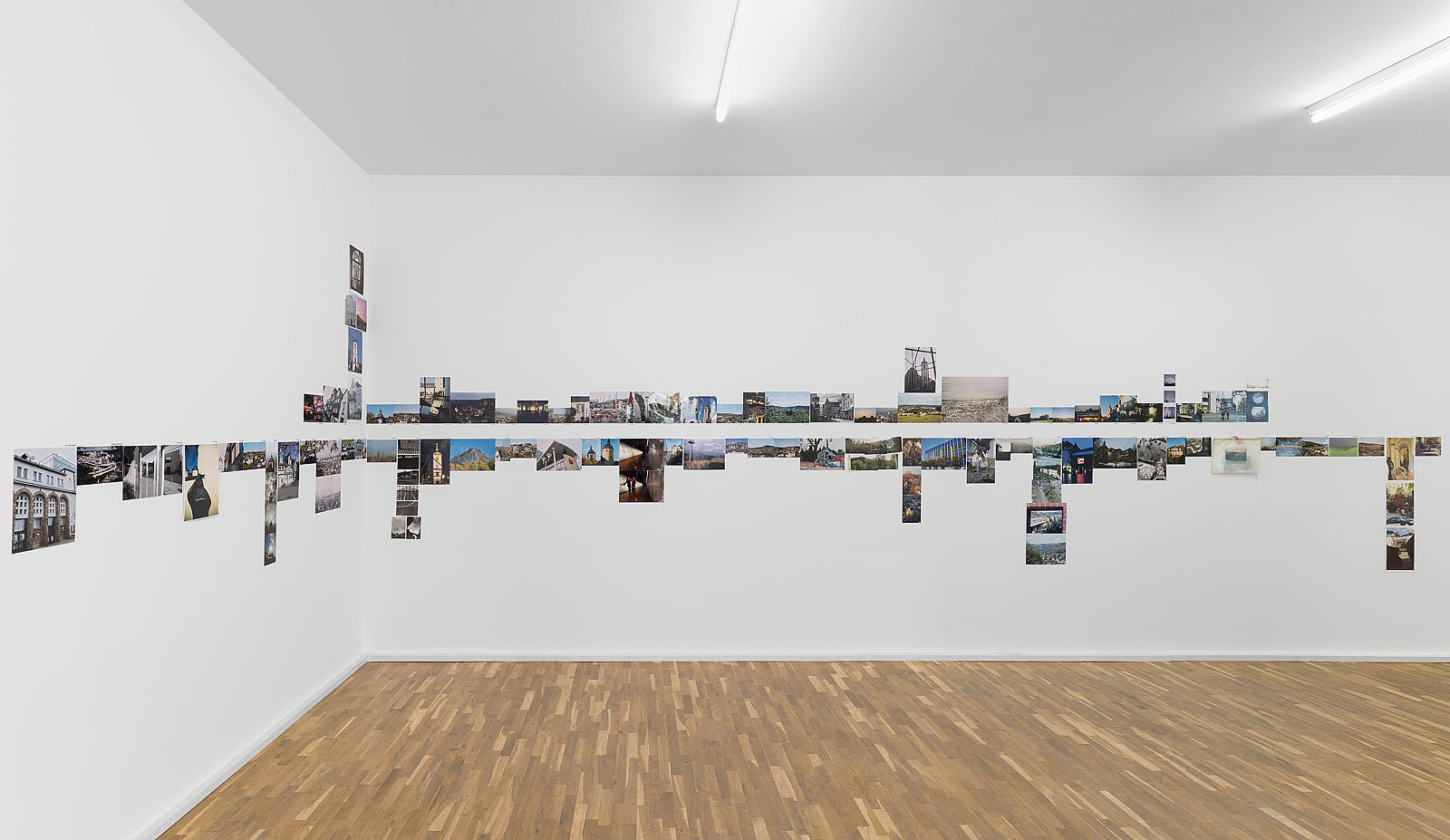
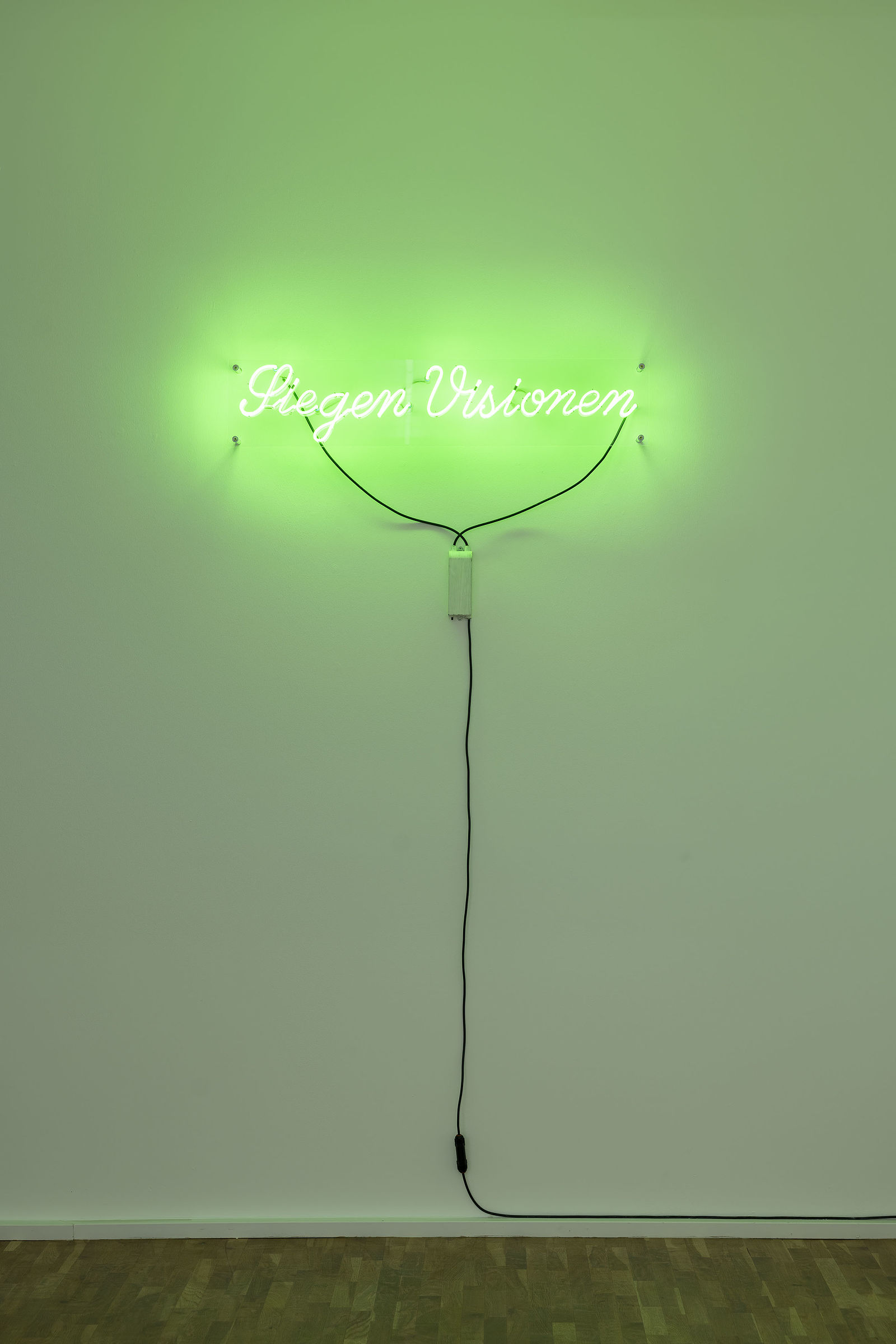
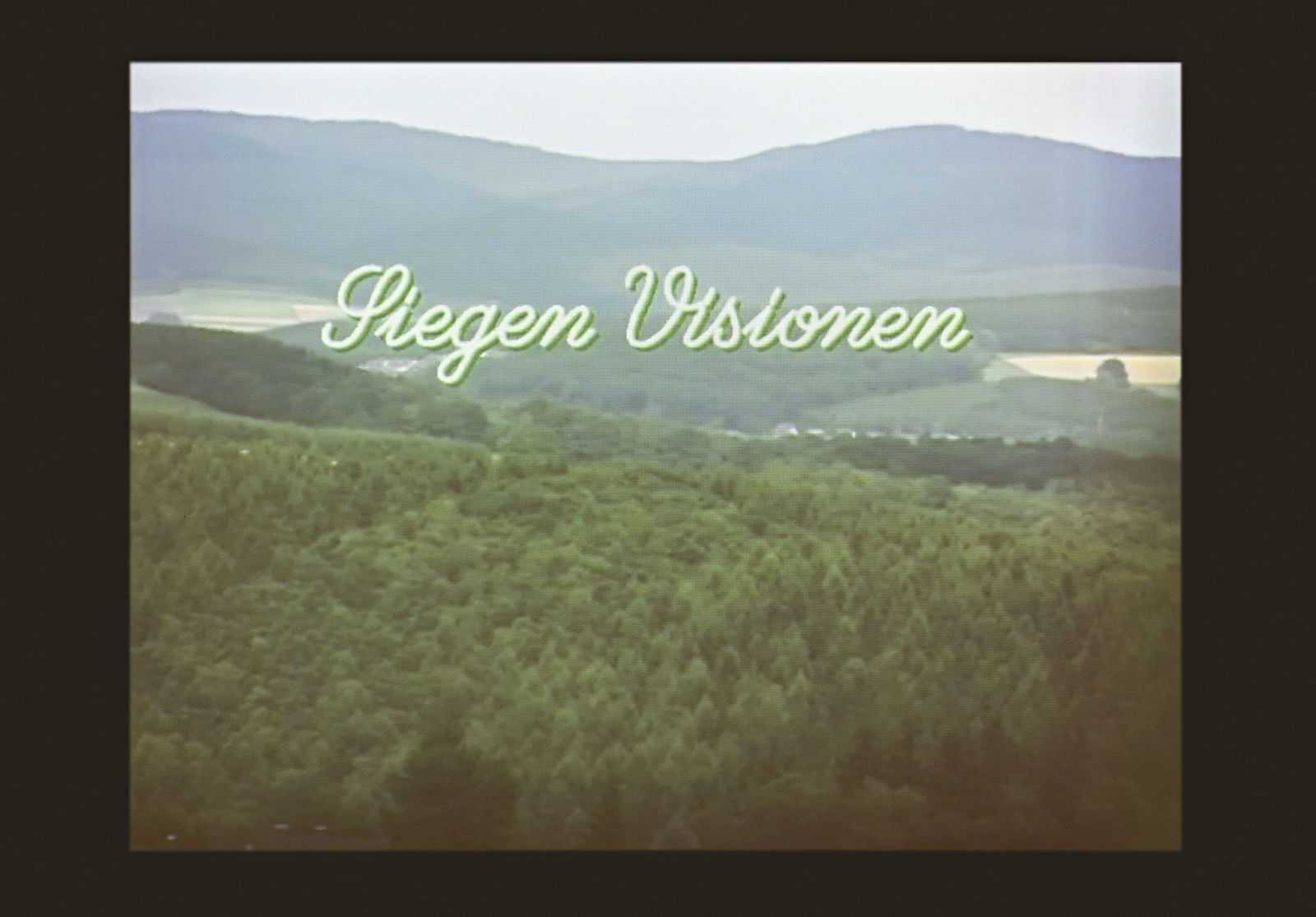
Apolonija Šušteršič (born in Ljubljana in 1965) is an architect and artist who analyzes cultural contexts based on their architectural and socio-historical background. During her first visit to Siegen, she was particularly interested in the region's specific residential culture, which focuses on the home and the family circle. While Bernd and Hilla Becher had already documented and analyzed this specific feature of the region with their photographs of half-timbered houses in the industrial area of Siegen, Apolonija Šušteršič examines how this 19th-century domestic culture can be viewed in the light of contemporary developments. The exhibition features a cinema setting designed by her, in which films created during her research in Siegen are presented.
The Munich-based artist group Swinger (Wolfgang Stehle, born in Munich in 1965; Stefan Wischnewski, born in 1974 in Neumünster, and Martin Wöhrl, born in 1974 in Munich) has already attracted attention with actions in which they condensed the duration of the exhibition setup, the vernissage, the exhibition, the finissage, and the dismantling into a single afternoon and evening, thus taking the idea of an exhibition as an event literally. In Siegen, the three artists are expanding their approach of transforming the organizational aspects of exhibition-making into an artistic action by turning the museum foyer into a place to spend the night.
Curators: Barbara Engelbach and Angelika Nollert
The exhibition “Spaces of Communication” is the third stop in the five-part exhibition series Performative Installation, an initiative of the Siemens Arts Program in cooperation with the Galerie im Taxispalais in Innsbruck, the Museum Ludwig in Cologne, the Museum für Gegenwartskunst Siegen, the Secession in Vienna, and the Galerie für Zeitgenössische Kunst Leipzig. Each stop addresses the common theme from a different perspective: Construction & Situation, Narrative, Communication, Body & Economy, and Architecture. A joint catalog will be published.
The exhibition is sponsored by the Kunststiftung NRW, the Mondriaan Foundation, Amsterdam, and the Embassy of the Kingdom of the Netherlands.