August Sander and Thomas Struth
Landscapes
Looking back to move forward is a fundamental concept of the Museum of Contemporary Art. The exhibition “Landscapes. August Sander and Thomas Struth” reveals continuities without obscuring historical differences: the familiar becomes visible in the new, and the unfamiliar in the old.
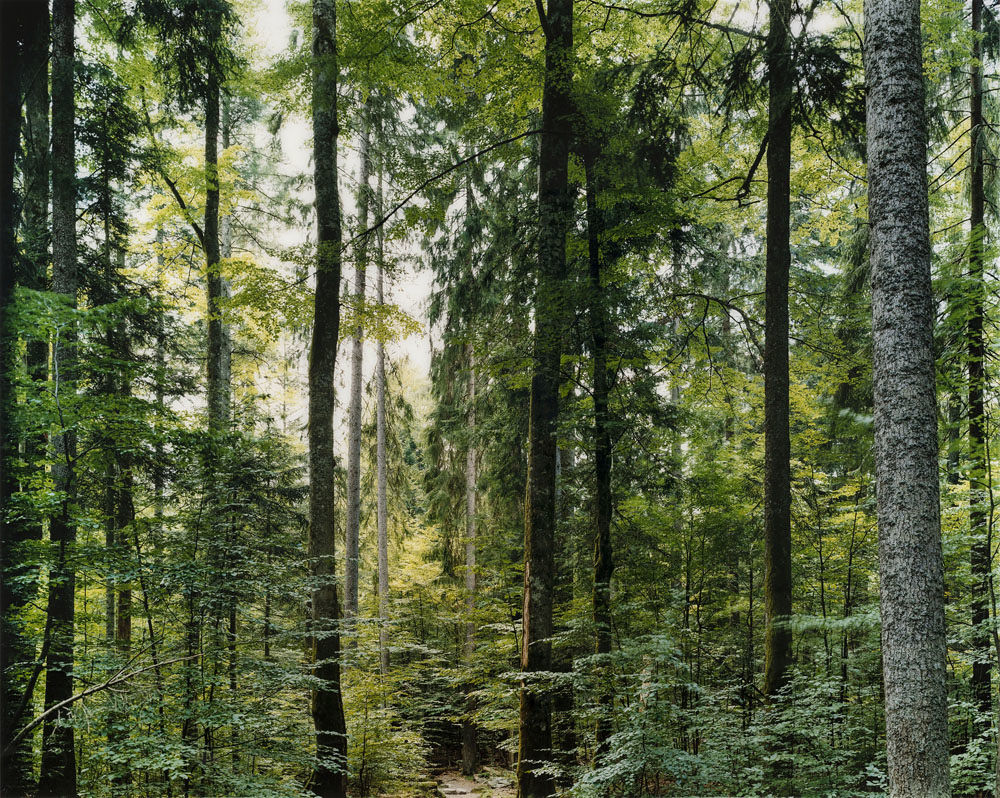
Thomas Struth, Paradise, 1998–2000, Paradise 19, Bayerischer Wald 1999, Contemporary Art Collection, permanent loan Viehof Collection, © Thomas Struth, Photo: Philipp Ottendörfer
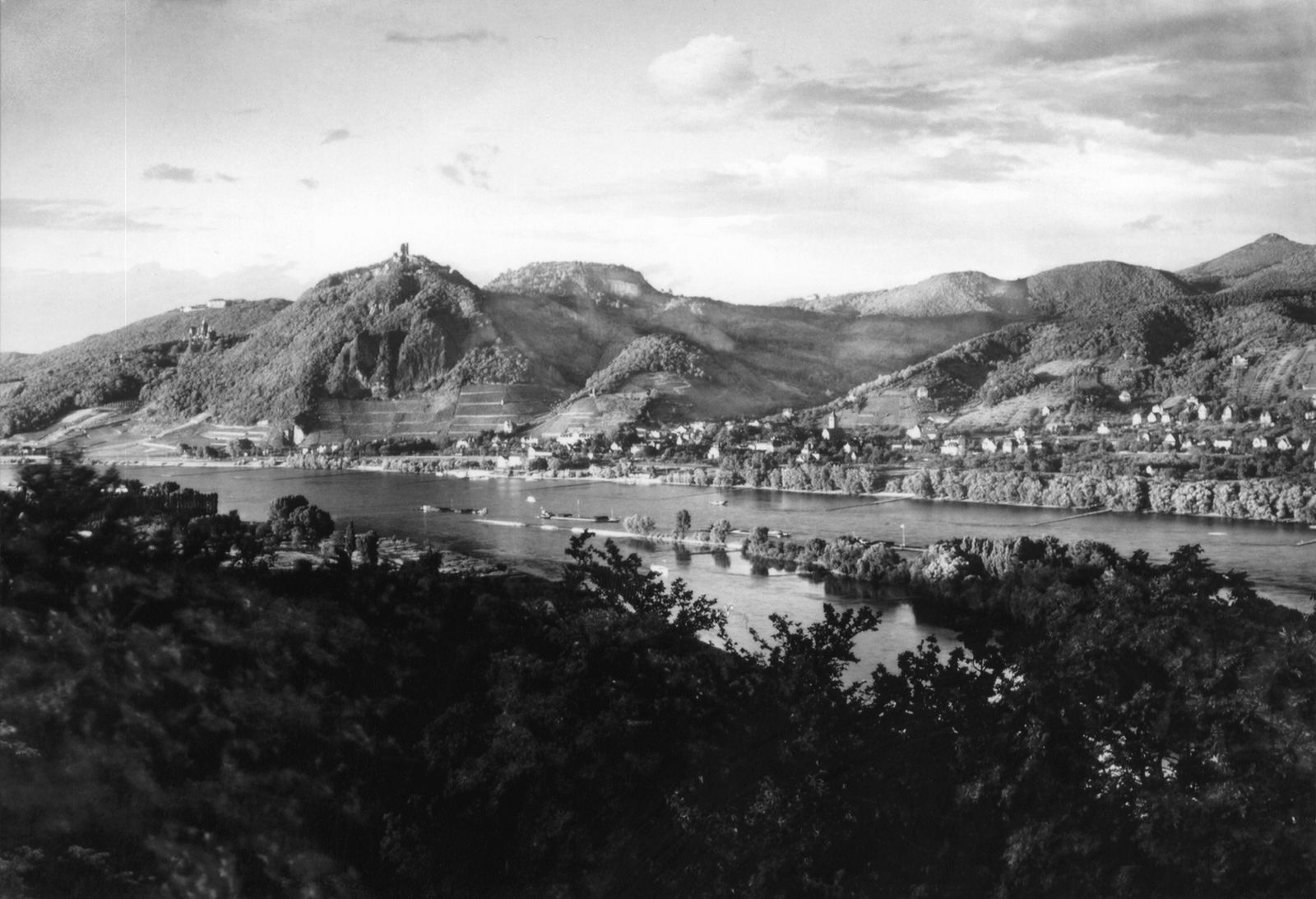
In the exhibition “Landscapes”, seven large-format colour photographs from Thomas Struth's Paradis’ series, created between 1998 and 2001, are brought into dialogue with August Sander's landscape photographs, which were created between 1906 and 1953 in parallel with his major project “People of the 20th Century”.
August Sander (1876–1964) developed the concept for his photographic work at the beginning of the 20th century. His visual language is characterized by his engagement with the visual arts of classical modernism and his use of photography at the time of the emergence of this new medium in the 19th century. By combining the new and the old, the new objective visual language with the old idea of a 19th-century picture atlas, he created an artistic process that became significant in contemporary art.
The exhibition at the Museum für Gegenwartskunst Siegen features photographs by August Sander of Westphalia and the Westerwald, the Siebengebirge with the Wolkenburg, the Eifel, the Moselle, as well as photographs of the Middle and Lower Rhine. These are portraits of landscapes in that he documented the geological and cultural-historical characteristics of each region: While he was primarily interested in the history of the earth, the traces of volcanoes, seas, and rivers in the Siebengebirge, he also shows the impact of human intervention in the landscapes of the Eifel. August Sander did not see the landscape as nature removed from time, but as a motif whose temporal, historical dimension can be read in the traces of the history of the earth and humankind.
Thomas Struth also works in series. His oeuvre includes well-known series of motifs such as streetscapes, cityscapes, family and individual portraits, and museum interiors, which he continues to pursue to this day. In the early 1990s, he began a new series of “Paradise Photographs,” which cannot be adequately described as landscapes. This is because the viewer is confronted with a forest scene that shows dense structures of leaves and branches, but no sky and hardly any ground for orientation. At first glance, some of the fauna seems exotic, while other elements appear deceptively familiar, such as a forest scene that seems to come from a romantic 19th-century painting, but actually shows a forest in Japan. These associations with paintings from the 17th to 19th centuries or landscape photography from the early 20th century are evoked in various ways. They make it clear that Struth's photographs are part of a series, but above all want to be perceived as individual images. The formats of the “Paradise Photographs” alone make the historical difference clear.
Curator: Barbara Engelbach